

22 Oct Boaters: 5 Best Practices for Shoreline Stewardship
Are you a boater or lake recreator on Kootenay Lake? Have you been wondering how to enjoy the activities you love in a way that respects and fosters shoreline health? Whether your speed is more of a morning paddle in your kayak or a sunset cruise in your bowrider, you’ve come to the right place!
Over the past several months, Friends of Kootenay Lake Stewardship Society has been working on the Kootenay Lake Shoreline Stewardship Project, a new collaborative initiative with Kootenay Lake Partnership. We have researched and compiled the best practices and techniques that boaters can implement to promote ecological resilience, water quality, and Ktunaxa cultural values while recreating on Kootenay Lake.
Check out our Shoreline Stewardship Project page for more details on the project and carefully developed resources, including the soon-to-be released Shoreline Stewardship short film, Shoreline Stewardship Guide, and recorded Shoreline Homeowner Workshop.
Information on shoreline stewardship should be accessible and practical. That’s why we have summarized our research into the following five best practices for boaters. Check them out below!
Technique #1 – Minimize Boat Wake Near Shore
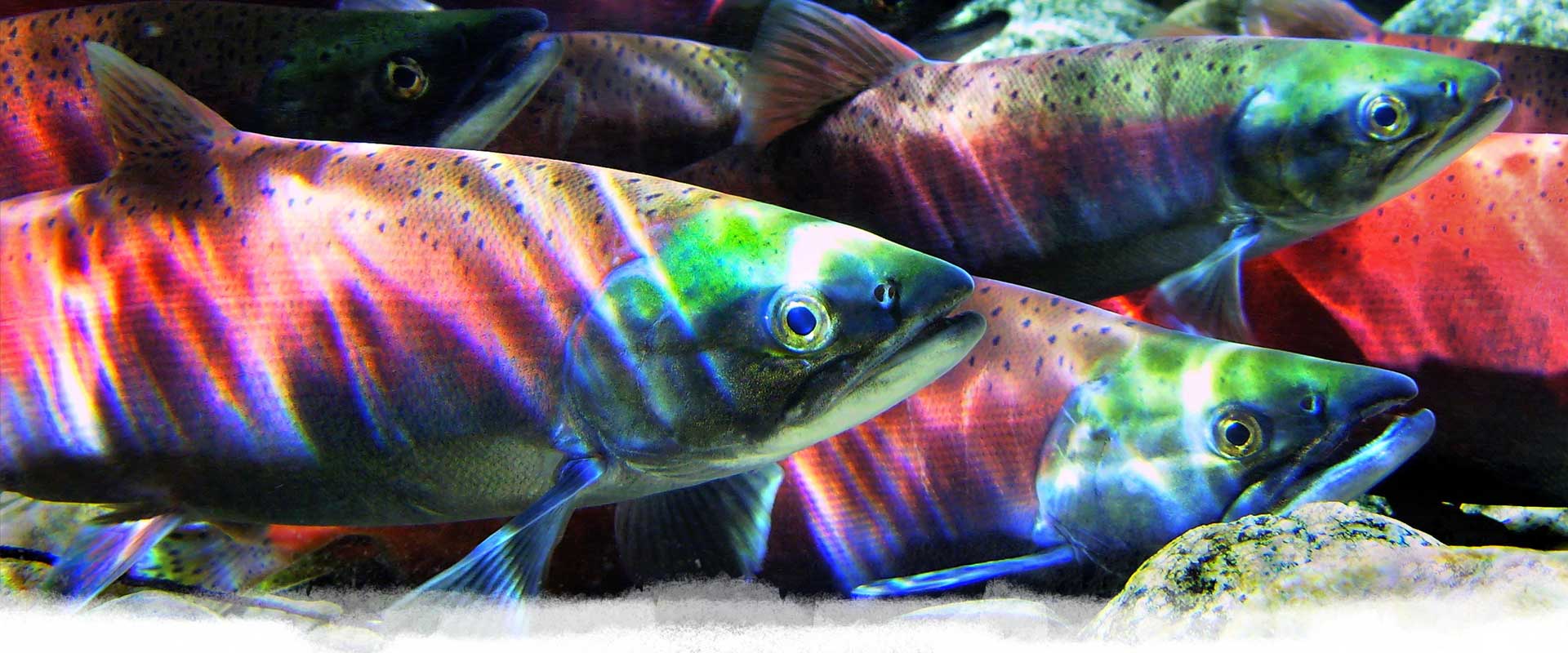
Large boat wakes create waves that repeatedly hit the shoreline. Over time, this can accelerate erosion, especially during periods of high water when banks are already vulnerable. The consequences of this extend from geophysical to biological: erosion and sediment harms our local shore-spawning kokanee salmon by smothering the redds (nests) where they spawn, blocking off the flow of oxygenated water and preventing fry from leaving. These redds sit in shallow water and can easily be dewatered or disturbed by large boat wakes.
A 2015 study by the University of Laval investigated the effects of wake surfing and wake board practices on the water column, finding that these activities impact the water column up to 5 metres deep and remobilize bottom sediments for over a minute. Their takeaway was that these practices must be done in areas 600 metres wide and at least 5 metres deep in order to lower shoreline impact. Additionally, they advocate for recreational boating speeds to not exceed 5 km/h in areas less than 2 metres deep, or 10 km/hr in areas that are 2-5 metres deep (Raymond & Galvez-Cloutier, 2015).
Further educating yourself on the impacts of boat wake, and observing the impacts of your wake while out on the water, is a great place to start.
Technique #2 – Clean, Drain, Dry, and Decontaminate
One of the greatest responsibilities for boaters and non-motorized watercraft users of all kinds is to prevent the spread of aquatic invasive species. Invasive zebra mussels (Dreissena polymorpha) and quagga mussels (Dreissena bugensis) haven’t yet established themselves in Kootenay Lake or in B.C., though they are majorly widespread in Eastern Canada and the United States. Unlike native freshwater mussels, these invasive species will attach to hard surfaces such as boat hulls and trailers. They are extremely small in size when they attach, making them difficult to detect.
In late 2024, whirling disease was detected in Kootenay Lake in three trout samples taken from the South Arm. That’s why decontamination is now strongly recommended when moving water crafts within the Columbia River Watershed and required if leaving and re-entering the watershed. This parasite produces microscopic spores that are extremely persistent and may not be removed without proper decontamination.
The four following steps have been proven to mitigate spread of aquatic invasives:
- Clean: Before leaving the water, inspect your boat, trailer, and equipment and remove any visible plants, mud, or debris. Give everything a good scrub and rinse on dry land, well away from any storm drains, ditches, or waterways.
- Drain: Drain all water from bilges, livewells, internal compartments, coolers, and bait buckets. Tilt your watercraft when storing it to make sure the bilge drains fully, and remove the drain plug before transporting between waterbodies (note: as of May 17, 2024, it is illegal to transport a watercraft in B.C. with the drain plug still in place).
- Dry: Let everything air dry for a minimum of 5 days before entering a new waterbody, or speed things up with towels, a wet/dry vacuum, or pressurized air. Every surface should be completely dry to the touch before another use.
- Decontaminate: Decontaminate to prevent the spread of whirling disease by using a 1:10 mixture of household bleach and freshwater. Apply this mixture for 15 minutes to water crafts and gear, then rinse and dry for a minimum of 24 hours. Ensure proper disposal of cleaning solution.
Technique #3 – Avoid Sensitive Wildlife Areas
While there’s practices that can be used to lessen shoreline harm while boating, sensitive wildlife areas, particularly wetlands and areas where waterfowl are nesting, should be avoided completely. To protect sensitive wildlife areas, minimize speed to less than 5 km/hr when 200 metres to the shore. A good rule of thumb is to stay a minimum of 50-100 metres away from shorebirds, nesting sites, and roosting sites to prevent disturbance and stress. This applies to motorized boats and non-motorized water crafts alike (Chatwin, 2010).
We recommend checking out the Kootenay Lake Shoreline Guidance Interactive Web Map made by the Kootenay Lake Partnership to learn more about sensitive wildlife areas around Kootenay Lake. This web map identifies wildlife presence and habitat features around the entire Kootenay Lake shoreline, providing an Aquatic Habitat Index Rating for each area. Select only “KL Shoreline Inventory – Aquatic Habitat Index Rating” from the layer list to just see this layer, and zoom in and click on highlighted areas of interest to you to see if you should take extra precaution there while boating around the lake.
Technique #4 – Use Sewage Pump-Out Facilities
It is illegal in B.C. to dump sewage or any other pollutant into water bodies, yet no level of government provides or requires waste pump-outs on lakes in B.C. In 2019, the West Kootenay Boating Association opened the first sewage pump-out facility for boaters on Kootenay Lake at the Prestige Marina. We are fortunate to have this resource here on Kootenay Lake, and it costs only $10 to pump out your boat.
Using proper disposal methods for sewage and waste keeps the lake healthy and safe for wildlife, humans, and pets alike. It is necessary to prevent algal blooms, continue safe recreation, and keep our water clean.
If you see someone dumping sewage into Kootenay Lake, please report it in one of two ways:
1. Report All Poachers and Polluters (RAPP): Call 1-877-952-7277 toll-free in BC or report online through this form.
2. Report a Natural Resource Violation: Call 1-844-NRO-TIPS (676-8477) or report online through this form.
Technique #5 – Become a Member, Sign Up for Our Newsletter, & Provide Feedback
So far, we have only received one year of funding for the Kootenay Lake Shoreline Stewardship Project, yet this work is far from over. With your support we hope to expand the project to increase on-the-ground shoreline restoration and community stewardship.
Members directly help us obtain funding to keep doing our work around Kootenay Lake by showing funders that local people are invested in Kootenay Lake stewardship, restoration, and education. Join us as a member today!
Also, subscribe to our newsletter to get monthly project updates and be the first to know of events and volunteer opportunities.
Do you have feedback on resources that should be included in the Shoreline Stewardship Project? Are you interested in getting involved with future phases of the work? Please leave suggestions and feedback in the form below.
Together we can make a difference and set the standard for shoreline stewardship on Kootenay Lake!